Sewer Backing Up Into the Shower: What to Do Now
Sewage coming up in your shower? Learn the common causes, what to do immediately, and how to tell if it’s a septic issue or a main sewer clog.
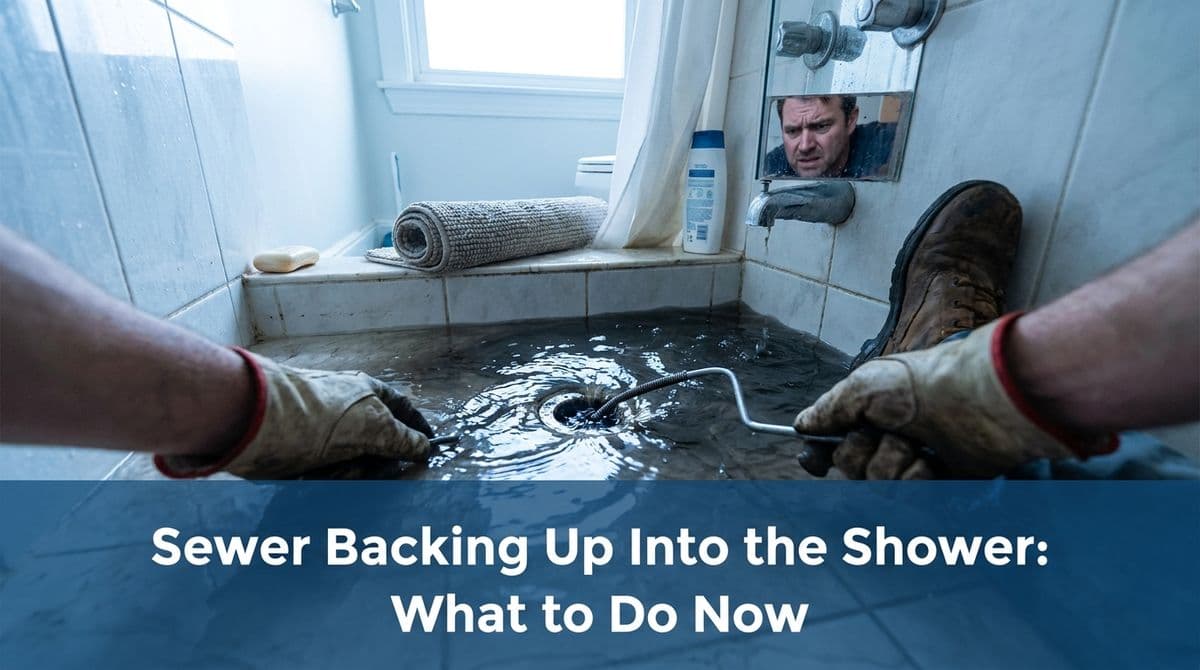
When Your Sewer Backs Up Into the Shower
We recently got a call from a homeowner — let’s call him Jason — who was dealing with a pretty nasty surprise. Every time water ran in the house, it started coming back up through the shower drain. No gurgling in the toilet, no obvious leaks in the yard… just sewage and dirty water rising right where you least want it: the shower.
Jason wasn’t sure if the problem was in his plumbing lines or his septic system. He knew where his septic tank lids were, but he didn’t know what to look for, what to turn off, or who to call first. That’s when he reached out to us and asked two very common questions:
- “What should I do right now to stop this?”
- “How do I know if it’s a clogged line or a full/failed septic tank?”
We’ll walk you through the same things we walked Jason through — step by step.
Why Sewage Comes Up in the Shower First
When there’s a blockage or backup in your main sewer or septic line, the wastewater in your home looks for the lowest exit point. In many homes, that’s a basement or first-floor shower drain. That’s why you might see it there before you notice problems elsewhere.
On Jason’s property, every time someone ran water — flushing a toilet, running a faucet, starting the washing machine — the wastewater couldn’t get out to the septic system properly, so it pushed back toward the house and up through the shower.
Common reasons this happens include:
- Main line clog from wipes, grease, paper towels, or foreign objects
- Tree roots intruding into the main sewer or septic line
- Full or overloaded septic tank that can’t accept more flow
- Collapsed or sagging (bellied) pipe holding water and waste
- Frozen or damaged line in colder climates
When we schedule a diagnostic visit like Jason’s, that initial inspection fee covers finding out which of these you’re actually dealing with.
What to Do Immediately When Wastewater Backs Up
If you see water or sewage coming up through a shower or tub drain, here’s what we recommend you do before we arrive:
- Stop running water in the house.
- Don’t flush toilets.
- Don’t run the dishwasher or washing machine.
- Don’t use sinks or showers.
Every gallon you send down the drains has nowhere to go and can make the backup worse.
- Turn off water to high-usage fixtures if possible.
You usually don’t need to shut off the main water to the whole house, but if someone in the home might accidentally run a fixture, it’s not a bad idea.
- Keep people and pets away from the affected area.
Sewage isn’t just gross — it can carry bacteria and pathogens. Avoid walking through it and keep kids and pets clear.
- Do not use chemical drain cleaners.
Those store-bought drain chemicals can sit on top of the clog, eat away at your pipes, and create a hazard for anyone who later works on the line. They’re almost never effective on a main line or septic problem.
- Take a quick look outside for obvious signs.
If you’re on septic and you know where your tank lids or clean-outs are (like Jason did), you can do a visual check:
- Is the ground super soggy or spongy above the tank or drain field?
- Do you notice strong sewage odors in one specific area?
- Is sewage surfacing in the yard?
You don’t need to open anything — just note what you see so you can tell us when we arrive.
Clogged Sewer Line vs. Septic Tank Problem
One of Jason’s biggest questions was whether he needed a plumber, a septic pumper, or both. That confusion is extremely common. Here’s how we typically sort it out during an inspection.
Signs It’s Likely a Main Line or Sewer Pipe Clog
- Multiple drains are slow or backing up at the same time.
- Toilets gurgle when you run water elsewhere.
- No obvious wet areas or sewage smells out in the yard.
- The problem started suddenly, often after heavy use (guests, big laundry day, etc.).
In these cases, we’ll usually:
- Locate and open a clean-out or septic inlet.
- Run a sewer machine (or hydro-jetter, where appropriate) to clear the blockage.
- Possibly run a camera through the line to check for roots, breaks, or bellies.
Signs It’s Likely a Septic Tank or Drain Field Issue
- You’re on a septic system and it’s been many years since the last pump.
- You notice wet, marshy spots or strong odors over the tank or drain field.
- Backups get worse after big water usage and slowly improve if you barely use water.
- You hear gurgling and see slow drainage throughout the house, even when not much water is being used.
For Jason and other septic customers, our first step is similar: find the septic tank lids and see what the tank level looks like. If it’s overfull or backing up into the inlet, pumping may be necessary. If the tank is at a normal level, the issue might be a clog between the house and the tank, or a failing drain field.
When to Call a Pro (And What We Actually Do)
Any time sewage is actively backing up into your shower, it’s time to call a professional. A minor slow drain you can sometimes baby along for a day or two. A sewer backup is different — it’s an emergency plumbing situation.
Here’s what we typically do on a visit like Jason’s:
- Inspect access points (clean-outs, septic lids, basement drains).
- Determine whether it’s a line clog or septic issue based on what we see and what you’re experiencing in the home.
- Clear the blockage with the appropriate equipment if it’s a clog.
- Recommend pumping if the septic tank is overfull or backing up.
- Advise on repairs if we find damaged, collapsed, or root-intruded lines.
We usually charge a straightforward diagnostic fee to come out, locate the problem, and give you clear options, just like we explained to Jason. From there, we walk you through costs and next steps before doing any additional work.
How to Prevent Future Sewer Backups
Once the immediate crisis is handled, we always talk prevention. A few key habits go a long way:
- Pump your septic tank regularly based on household size and usage (often every 3–5 years, but it varies).
- Only flush human waste and toilet paper. No wipes (even “flushable”), paper towels, feminine products, or diapers.
- Keep grease and food scraps out of the drains. Let grease cool and throw it in the trash.
- Install and use hair catchers in showers and tubs.
- Avoid driving or parking over septic lines or tanks, which can crush or crack pipes.
- Consider a camera inspection if you’ve had repeated backups, to catch root intrusion or pipe damage early.
If you’re staring at a shower full of murky water right now, you don’t have to figure it all out alone. Do what Jason did: stop using water, keep everyone clear of the mess, and give a trusted local pro a call so we can track down the cause and get your home draining normally again.