Septic Backups 101: Inlet Clog or Full Tank?
Slow drains and septic backups? Learn how to tell if it’s a simple inlet clog you can check yourself or if your septic tank really needs pumping.
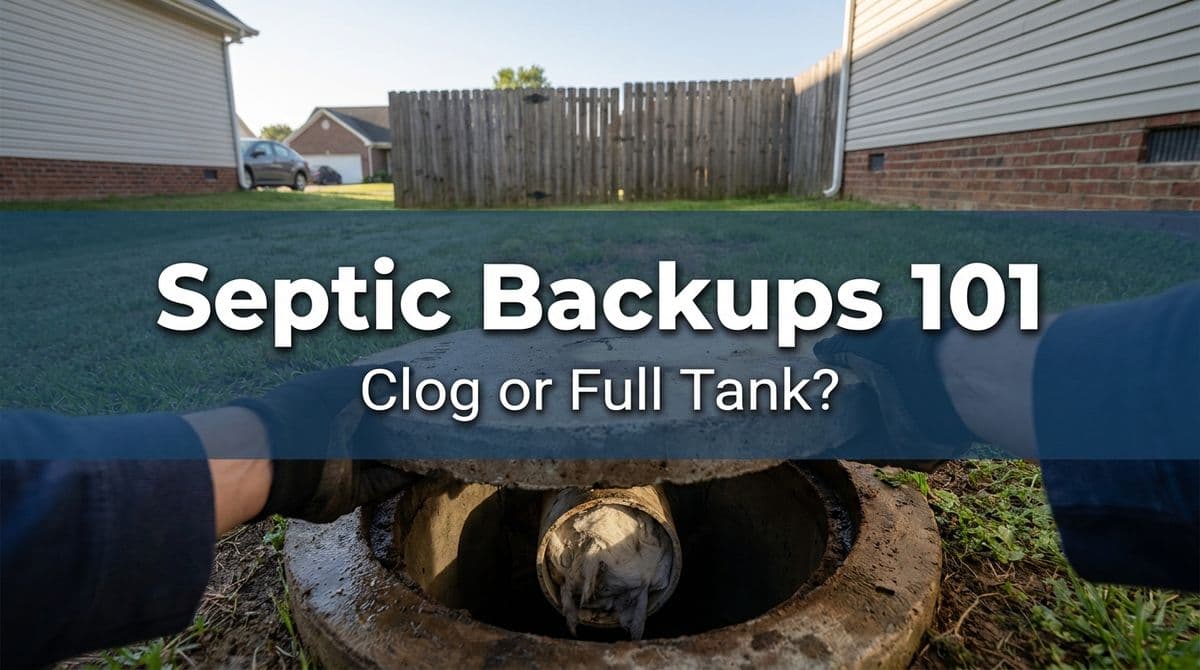
Septic Backups 101: Is It Just an Inlet Clog or Do You Need Pumping?
We recently got a call from a homeowner — let’s call him Mike — who was pretty stressed about his septic system. He told us, “Something’s going on with my drain, with my system, whatever it is. I just emptied the tank two years ago when I bought the house.”
That’s a call we get a lot. The big question on Mike’s mind (and probably yours if you’re reading this) was simple: “Do I really need my tank pumped again, or is this just a clog?”
On the phone, we walked Mike through a couple of safe checks he could do himself before we came out. That same advice can save you time, money, and a lot of guesswork, so let’s walk through it step by step.
First: What’s Actually Backing Up?
When Mike called, he didn’t know what was wrong — just that drains weren’t acting right. That’s usually how it starts. Before you assume the worst, pay attention to where and how things are backing up.
Common signs of a septic inlet clog
- Only one bathroom or one part of the house is backing up.
- Toilet nearest the septic tank gurgles or is slow to flush.
- Sink or tub in the same area drains slowly or not at all.
- Issues started suddenly after heavy use (guests, laundry day, long showers).
These symptoms often point to a clog in the line between the house and the tank or right at the tank’s inlet — the exact possibility we mentioned to Mike on the call.
Common signs of a full or failing tank
- Multiple fixtures in the house are slow or backing up at the same time.
- Backups get worse whenever you use a lot of water.
- You hear gurgling in several drains around the house.
- You notice wet or spongy ground, or sewage odors near the tank or drain field.
- It’s been many years since the last pump (or you’ve never had it pumped).
If several of these fit your situation, your tank may be due for pumping or you could have a more serious drain field issue.
What You Can Safely Check Yourself
On the phone, we told Mike something we tell a lot of homeowners: if you’re comfortable and it’s safe, you can open the first inlet lid on your septic tank and take a quick look. Sometimes you’ll find the problem is just a wad of toilet paper jammed right at the inlet.
Step 1: Locate your septic tank lids
On a typical residential system, there are usually two lids:
- Inlet lid – closest to the house. This is where the main line from your home enters the tank.
- Outlet lid – closer to the drain field. This is where effluent exits the tank.
The lid you care about for this check is the first one coming from the house — the inlet lid, just like we described to Mike.
Step 2: Open the inlet lid safely
Here’s how to do this as safely as possible:
- Use caution around the tank. Septic tanks can be dangerous if you fall in or breathe concentrated gases. Never lean over the opening or put your head inside.
- Have another adult outside with you if possible.
- Use proper tools to lift the lid (it can be heavy). If it’s too heavy or buried deep, stop and call a professional.
Once the lid is off, stand to the side, not directly over the opening.
Step 3: What to look for at the inlet
At this point with Mike, we told him exactly what we’ll tell you: you’re not trying to inspect the whole tank, just the spot where the pipe from the house enters.
Look for:
- A visible “plug” of toilet paper or debris right where the pipe dumps into the tank.
- Water level at or just below the bottom of the inlet pipe (normal if the tank is working right).
- Water rushing in when someone flushes a toilet in the house.
If you see a solid wad of paper or wipes blocking the inlet, that’s often the reason your fixtures are backing up. Sometimes, gently moving it with a long stick (without dropping anything into the tank) can break the clog free. If you’re not comfortable doing that, stop and call a pro.
Clogged Line vs. Full Tank: How to Tell the Difference
We explained to Mike that we charge different prices depending on what’s actually wrong — for example, snaking a line vs. fully pumping the tank. The same logic applies to you: knowing the likely cause helps you avoid paying for services you don’t need.
Likely inlet/line clog if:
- You recently had the tank pumped (within the last 2–3 years for a typical family).
- The problem started suddenly.
- Only one bathroom or side of the house is affected.
- You see a clear paper clog at the inlet when you open the first lid.
In these cases, you may just need a line snaked or jetted between the house and the tank.
Likely full tank or bigger issue if:
- It’s been 4–5+ years since the last pump (less, if you have a large family or small tank).
- Both sides of the house are affected, or every fixture is slow.
- The water level in the tank is up at or above the outlet pipe (if you’re able to see it).
- You see sewage or standing water over the tank or in the yard near the drain field.
When we’re on site, we look at these same clues to decide whether a snake is enough or if a full pump-out is necessary.
When to Call a Professional (and What We Actually Do)
With Mike, we let him know that if it turned out to be a simple clog at the inlet, we might just need to snake the line, which is quicker and cheaper than a full pump-out. If the tank needed pumping, that’s a more involved service.
Call a pro right away if:
- Sewage is backing up into the house.
- You smell strong sewage odors inside or outside.
- You can’t safely access or open the septic lids.
- You’ve tried basic checks and nothing has improved.
Here’s what we typically do on a service call like this:
- Inspect the line from the house and the inlet area.
- Snake or jet the line if we find a clog.
- Measure tank levels to see if it’s truly full.
- Recommend pumping only if the tank level and sludge depth justify it.
Sometimes, like we told Mike, we can diagnose and clear a clog in just a few minutes. Other times, the best solution is to pump the tank and give you a clean slate.
Simple Habits to Prevent Future Backups
Whether your problem turns out to be a clog or a full tank, a few habits will help you avoid emergency calls in the future:
- Only flush human waste and toilet paper. No wipes (even “flushable” ones), paper towels, feminine products, or grease.
- Spread out laundry and water use instead of doing everything in one day.
- Schedule regular pumping based on your household size and tank size (often every 3–5 years).
- Know where your lids are and keep them accessible for easy inspection and service.
If you’re staring at slow drains right now and wondering, like Mike did, whether it’s just a clog or time for pumping, start with the safe checks above. And if anything feels questionable, don’t guess — give a professional a call and we’ll walk you through it or come take a look.